Author: freeman4u16

  • Tennessee Behavioral Health Pathways Scholarship: Complete Guide to Eligibility, Benefits & How to Apply

    Tennessee Behavioral Health Pathways Scholarship: Complete Guide to Eligibility, Benefits & How to Apply

    Tennessee is short on mental health and substance use professionals, and the shortage is worst in exactly the communities that need help most: rural counties and low-income neighborhoods with few counselors, psychiatric nurses, or licensed clinical social workers to go around. The Tennessee Behavioral Health Pathways Scholarship was built to fix that gap directly — by paying for graduate school in exchange for a promise to work where the need is greatest.

    This guide breaks down exactly how the scholarship works: who qualifies, how much it pays, what the post-graduation service commitment actually involves, and how to find out when the next application window opens.

    Tennessee Behavioral Health Pathways Scholarship

    What Is the Tennessee Behavioral Health Pathways Scholarship?

    The Tennessee Behavioral Health Pathways Scholarship, sometimes shortened to the Pathways Behavioral Health Scholarship, is a state-funded tuition assistance program created in 2023 by the Tennessee General Assembly and Governor Bill Lee. It is administered by the Tennessee Department of Mental Health and Substance Abuse Services (TDMHSAS) in partnership with two nonprofit associations: the Tennessee Association of Mental Health Organizations (TAMHO) and the Tennessee Association of Alcohol, Drug & other Addiction Services (TAADAS).

    The program pays tuition for students pursuing a master’s degree in a behavioral health field, in direct exchange for a commitment to work afterward at a community agency that serves Tennesseans with the greatest needs and the least ability to pay. It is best understood as a service-for-tuition scholarship rather than a traditional merit or need-based award — the state is essentially investing in future clinicians who agree to practice where the workforce shortage is most severe.

    How the Program Started and How It Has Grown

    The state’s initial investment was $3 million, appropriated to TDMHSAS to launch the scholarship for the first time in early 2024, covering tuition assistance retroactive to Spring 2024. Demand proved strong enough that lawmakers kept expanding the pool. State leaders added roughly $900,000 in supplemental funding, and for the following fiscal year, Governor Lee and the General Assembly appropriated more than $4.4 million in a second funding round. The Tennessee Opioid Abatement Council also contributed $2 million toward the program, tying part of the funding directly to opioid-related settlement dollars. Altogether, the state has invested more than $10.3 million in the scholarship across its first two years.

    By spring 2025, TAMHO alone had awarded more than $1.75 million in scholarships to 130 graduate students, with a significant share going to social work students — 34 awards went to University of Tennessee students, and 33 of those were for the UT College of Social Work’s MSSW program, with one additional award for a psychiatric nursing student.

    Who Is Eligible?

    Eligibility for the Pathways Behavioral Health Scholarship is intentionally narrow and focused on graduate-level clinical training. To qualify, an applicant must meet all of the following:

    • Be a Tennessee resident.
    • Be seeking a master’s degree in counseling, psychiatric nursing, social work, psychology, or a similar behavioral health profession.
    • Be enrolled, or in the process of enrolling, in an accredited higher education institution located in Tennessee.

    The program targets students working toward the specific graduate credentials that lead to licensure as a therapist, counselor, clinical social worker, psychiatric nurse practitioner, or psychologist — the roles Tennessee most urgently needs to fill in its public behavioral health system.

    How Much Does the Scholarship Pay?

    Eligible students can receive up to $15,000 in tuition assistance per academic year, for a maximum of two years, bringing the total possible award to $30,000 over the life of the scholarship. The funds are intended to be applied directly toward tuition costs for the qualifying master’s program, helping offset what is often the single largest financial barrier standing between a prospective clinician and a completed degree.

    The Service Commitment: What You Owe in Return

    This scholarship is not a gift with no strings attached — it is structured as a direct trade of tuition support for future service. In exchange for the funding, recipients commit to working at a qualifying community behavioral health agency for the same length of time they received scholarship support. A student who receives two years of funding, for example, commits to two years of service at an approved agency after graduation.

    Not every employer counts toward fulfilling this commitment. Qualifying agencies must meet specific criteria:

    • Be a member of TAADAS or TAMHO.
    • Hold a provider contract with the Tennessee Department of Mental Health and Substance Abuse Services, or
    • Be part of the Opioid Abatement Treatment Grant network funded by the Tennessee Opioid Abatement Council.

    Both TAADAS and TAMHO publish lists of eligible contracted community agencies, and it’s worth checking that list — and even lining up a potential supervisor — before assuming a specific employer will satisfy the requirement, since not every provider affiliated with either association is automatically eligible to accept scholarship recipients.

    Why the Program Focuses on Underserved Communities

    The design of the Pathways Scholarship reflects a specific policy goal: getting more licensed clinicians into the public and nonprofit behavioral health system rather than exclusively into private practice. The community agencies eligible to satisfy the service commitment are specifically those that serve Tennesseans with the greatest needs and the least ability to pay — populations that are frequently underserved because private-pay and insurance-based practices are more financially attractive to new graduates carrying student debt. By covering tuition upfront, the state removes much of the financial pressure that might otherwise push a new graduate away from community mental health work and toward higher-paying private settings.

    Current Application Status

    Applications for the Tennessee Behavioral Health Pathways Scholarship are periodically opened and closed based on available funding, and the program has closed its application portal in the past after receiving what officials described as significant interest from hundreds of prospective applicants.

    Because the program depends on annual state budget appropriations and periodic opioid settlement contributions, application windows do not stay open year-round. TDMHSAS has reopened the portal multiple times as new funding rounds were approved, so prospective applicants should check the official state page directly for the current status before assuming the window is open, and should be prepared to move quickly once a new round is announced given how fast prior rounds have filled.

    How to Apply for the Pathways Scholarship

    • Step 1: Confirm you meet the base eligibility requirements — Tennessee residency, enrollment (or upcoming enrollment) in an accredited Tennessee institution, and pursuit of a qualifying behavioral health master’s degree.
    • Step 2: Check the current application status on the official TDMHSAS scholarship page or through TAMHO and TAADAS, since the portal opens and closes based on funding availability.
    • Step 3: Review the list of TAADAS-member and TAMHO-member community agencies with active state or Opioid Abatement Council contracts, so you understand which future employers would satisfy your service commitment.
    • Step 4: Submit your application during an open window, including proof of enrollment or admission to your graduate program and documentation of Tennessee residency.
    • Step 5: Wait for a decision. According to program administrators, applicants can typically expect a response within about three weeks, though awards are not guaranteed even for applicants who meet the basic criteria.
    • Step 6: If awarded, apply the funds toward tuition as directed and begin identifying a qualifying community agency placement well before graduation, since the clock on your service commitment starts once you begin working full-time in the role.
    • Step 7: After graduation, complete your service commitment at an approved agency for a period matching the number of years you received scholarship funding.

    Frequently Asked Questions

    Can I use the Pathways Scholarship for an out-of-state graduate program?

    No. The scholarship requires enrollment in an accredited higher education institution located in Tennessee, so programs based entirely outside the state do not qualify.

    Does the scholarship cover a doctoral degree?

    The program is specifically designed for master’s degree students in counseling, psychiatric nursing, social work, psychology, and similar behavioral health fields, not doctoral programs.

    What happens if I don’t complete my service commitment?

    The scholarship is explicitly structured as tuition assistance in exchange for a defined period of service at a qualifying community agency. Applicants should confirm the specific consequences of not fulfilling that commitment directly with TDMHSAS, TAMHO, or TAADAS before accepting the award, since terms can be detailed in the award agreement itself.

    Which agencies count toward the service requirement?

    Only community agencies that are members of TAADAS or TAMHO and hold either a provider contract with TDMHSAS or funding through the Tennessee Opioid Abatement Council’s treatment grant qualify. Not all member agencies are eligible to accept scholarship recipients, so it’s worth confirming a specific employer’s status in advance.

    Is this scholarship renewable automatically each year?

    The award is structured to provide up to $15,000 per year for a maximum of two years, but recipients should confirm renewal requirements with program administrators, since maintaining eligibility may depend on continued enrollment and academic standing.

    Who do I contact with questions about the program?

    TAADAS has published a dedicated program email address, pathways@taadas.org, for prospective applicants with questions about eligibility, agency placement, or the application process.

    Final Thoughts

    The Tennessee Behavioral Health Pathways Scholarship represents one of the more direct workforce-investment tools a state can offer: real tuition dollars — up to $30,000 — in exchange for a defined commitment to serve the communities that need behavioral health professionals most. For Tennessee residents pursuing a master’s degree in counseling, social work, psychiatric nursing, or psychology, it can meaningfully lower the cost of graduate school while also providing a clear post-graduation career path into community-based care. Because funding rounds open and close based on the state budget and opioid settlement contributions, the best next step for an interested applicant is simple: check the current status on TDMHSAS’s official scholarship page, get application materials ready in advance, and be prepared to apply as soon as the next round opens.

  • VA Health Professional Scholarship Program: The Complete Guide

    VA Health Professional Scholarship Program: The Complete Guide

    Healthcare education is expensive, and for students pursuing nursing, medicine, psychology, social work, or allied health careers, tuition and living costs can pile up long before the first paycheck arrives. The Department of Veterans Affairs runs one of the country’s most generous answers to that problem: the Health Professional Scholarship Program, widely known as HPSP. It covers full tuition, pays a monthly living stipend, and provides a career pathway straight into the VA health system, in exchange for a defined period of service caring for veterans after graduation.

    This guide explains exactly what the VA HPSP is, how it developed into its current form, who qualifies, what disciplines are covered, what the service commitment looks like, and how to put together a competitive application.

    VA Health Professional Scholarship Program

    What Is the VA Health Professional Scholarship Program?

    HPSP is a federally funded scholarship administered by the Veterans Health Administration that pays a participant’s tuition and required fees at a U.S. regionally accredited school, along with a monthly stipend for living expenses and an annual stipend for books and instructional materials. In return, recipients commit to working at a VA health care facility for a set minimum period after they complete their education and meet the relevant licensure or qualification standards.

    The program traces its legal foundation to the Uniformed Services Professions Revitalization Act of 1972, and it was later expanded under the 2018 VA MISSION Act to help the department recruit and retain staff in occupations where shortages are most severe. Since a major relaunch in 2016, HPSP has awarded well over two thousand scholarships to students entering healthcare fields the VA considers hard to fill.

    Why the VA Created This Program

    The VA operates one of the largest integrated health care systems in the United States, and like many health systems nationwide, it regularly faces shortages in specific clinical roles, particularly nursing, mental health, and rehabilitation specialties. Rather than competing solely on salary once a candidate is already licensed, HPSP lets the VA build its own pipeline of clinicians by investing in them while they are still in school, in exchange for a guaranteed period of service once they graduate.

    For students, that trade-off can be extremely favorable. Full tuition coverage combined with a living stipend often exceeds what a private scholarship or a federal loan forgiveness program can offer, and it comes with a job already lined up at the end of the degree, removing much of the uncertainty that usually follows graduation.

    HPSP Program Tracks and Eligible Disciplines

    HPSP is not a single, uniform scholarship. It actually covers three related tracks, each tied to a different group of disciplines and a different minimum service obligation.

    1. HPSP (General Track)

    The core HPSP track supports students pursuing degrees that lead to VA-recognized clinical occupations, including physicians (MD or DO), registered nurses at the associate or bachelor’s level, nurse practitioners, physician assistants, clinical psychologists, and social workers. Eligible occupations can shift slightly from year to year depending on where the VA’s staffing needs are greatest, so applicants should always confirm the current list before applying.

    2. HPSP Vet Center (Readjustment Counseling Service) Track

    This track is specifically for students pursuing full-time education in behavioral health disciplines who plan to work at Vet Centers, the VA’s community-based counseling centers that serve veterans and their families outside of traditional VA medical facilities. Eligible disciplines include psychology, social work, licensed professional mental health counseling, and marriage and family therapy. Funding under this track generally covers the final two years of a program of study, and clinical internships are not counted toward that two-year funding window.

    3. Visual Impairment and Orientation and Mobility Professionals Scholarship Program (VIOMPSP)

    VIOMPSP is a companion program under the same umbrella, aimed at a narrower set of specialties: Certified Visual Rehabilitation Therapists, Certified Low Vision Therapists, Certified Orientation and Mobility Specialists, and Certified Assistive Technology Instructional Specialists. These roles help veterans with vision loss regain independence, and the VA has historically struggled to fill them, which is why the service obligation and funding structure exist as a distinct track.

    Service Obligation by Track

    The length of service you owe the VA after graduation depends entirely on which track and discipline you are approved under. The table below summarizes the general structure, though exact terms are set out in your signed acceptance agreement and can vary by occupation.

    Program TrackWho It’s ForMinimum Service Obligation
    HPSP (general)Physicians, nurses, physician assistants, nurse practitioners, clinical psychologists, social workers2 years at a VA health care facility
    HPSP Vet CenterPsychology, social work, licensed professional mental health counseling, marriage and family therapy6 years at a Vet Center
    VIOMPSPVisual impairment and orientation and mobility specialists (CVRT, CLVT, COMS, CATIS)3 years at a VA health care facility

    Benefits of the VA HPSP Scholarship

    • Full tuition coverage: Full tuition and required fees are paid directly to your accredited U.S. school for as long as you remain in good academic standing and continue meeting program requirements.
    • Monthly living stipend: Recipients receive a monthly stipend intended to help cover housing, food, and other living costs while enrolled full-time.
    • Book stipend: An annual stipend is provided specifically for required textbooks and instructional materials.
    • Coverage duration: The scholarship generally pays for up to four years of study, extending to six years for full-time VA employees enrolled part-time, which matters for working professionals returning to school.
    • Guaranteed employment pathway: Recipients are guaranteed a position at a VA health care facility upon graduation and licensure, removing the job-search uncertainty many new graduates face.
    • Meaningful career experience: Working at a VA facility after graduation provides direct clinical experience in a large, mission-driven health system, along with the professional network that comes with it.

    Eligibility Requirements

    Baseline eligibility criteria apply across all HPSP tracks, though individual occupations can carry additional, more specific requirements.

    • Enrollment status: You must be enrolled full-time in a qualifying program at a school that holds U.S. regional accreditation.
    • Academic standing: Applicants generally need a cumulative GPA of at least 3.3, supported by an official transcript showing at least 15 earned credit hours within the past five years.
    • Citizenship and age: Applicants must be U.S. citizens, at least 18 years old, and able to pass a background check to obtain the security clearance required for VA employment.
    • Financial standing: Applicants cannot be in default or delinquent on any federal debt at the time of application.
    • Veteran status not required: Contrary to a common assumption, you do not need to be a veteran yourself to apply for most HPSP occupations; both veterans and civilians are eligible to compete for the scholarship.

    How to Apply for the VA HPSP

    Applications are submitted entirely online through the VA’s Application Management System, known as AMS, and the window typically opens in January and closes in late February each year, so timing matters. Here is the general process.

    Step 1: Create Your AMS Account

    Set up a single applicant profile in the Application Management System and provide two separate email addresses, since the VA uses these for all communication throughout the review process.

    Step 2: Gather Required Documents

    You will need to prepare and upload your completed application, academic verification, letters of recommendation, a resume, official transcripts, a Declaration for Federal Employment, and, if you are a current or former VA employee, your SF-50 form.

    Step 3: Coordinate With Your School Early

    Academic verification and transcript requests often require processing time from your registrar’s office, so start these requests as soon as the application window opens rather than waiting until the final weeks.

    Step 4: Submit Before the Deadline

    Late, paper, scanned, or emailed applications are not accepted under any circumstances. If you need to correct something after submitting, you must file a formal addendum, and all required items must still be complete before the application window closes.

    Step 5: Wait for Committee Review

    Applications that meet minimum eligibility requirements are reviewed by the VHA Scholarship Committee. Selected candidates are then referred to the national program manager and director, who make final award decisions. Because the VA receives a high volume of inquiries during this period, applicants generally will not receive status updates until the review process is complete.

    Tips to Strengthen Your HPSP Application

    • Exceed the minimum GPA where possible: A GPA above the 3.3 minimum, combined with academic honors or strong performance in core science or clinical coursework, helps your application stand out in a competitive applicant pool.
    • Ask the right people for recommendations: Choose recommenders who can speak directly to your clinical aptitude, work ethic, or commitment to service, rather than someone who only knows you casually.
    • Highlight veteran-focused experience: If you have any experience volunteering with veterans, working in a VA facility, or serving in the military yourself, make sure this is clearly reflected in your resume and application materials.
    • Double-check every required document: Missing or incomplete transcripts, unsigned forms, or expired background-check documentation are common reasons applications stall during review.
    • Start early: Since transcript requests, recommendation letters, and background checks all take time, begin preparing your materials well before the application window opens in January.

    How HPSP Compares to Other VA Education Benefits

    HPSP is not the VA’s only education-related benefit for aspiring health care professionals, and understanding how it differs from similar programs can help you decide which one fits your situation. The VA Student Trainee Experience Program, known as VA-STEP, offers paid, hands-on clinical experience for students in nursing, medical laboratory science, and pharmacy programs, but it functions more like a structured internship than a scholarship, and it does not cover tuition. The Specialty Education Loan Repayment Program, or SELRP, works in the opposite direction from HPSP: rather than funding your education up front, it repays qualifying educational loans for physicians already in residency who commit to a VA service obligation.

    In short, HPSP is the right fit for students who are still early enough in their education to plan around a multi-year funding commitment, while SELRP suits residents who have already taken on debt and want it repaid in exchange for future service, and VA-STEP suits students who want paid clinical exposure without a post-graduation obligation attached.

    Who Should Consider Applying for HPSP

    HPSP tends to be the strongest fit for a specific type of applicant, and being honest with yourself about which category you fall into can save you from committing to an obligation that does not match your career plans.

    • Students already interested in VA careers: If you already picture yourself building a long-term clinical career within a VA facility, the service obligation is not a downside, it is simply the starting point of the job you wanted anyway.
    • Students in high-cost programs: Because HPSP covers full tuition rather than a fixed dollar amount, it delivers the most value to students in longer or more expensive programs, such as medicine, doctoral-level psychology, or nurse practitioner degrees.
    • Veterans and military-connected applicants: Students with military or VA-adjacent experience often have an easier time both qualifying for and adjusting to the culture of VA facilities after graduation.
    • Less ideal for applicants wanting full flexibility: Applicants who are not yet sure where they want to practice, or who want maximum flexibility after graduation, may find the multi-year service commitment too restrictive compared with a no-strings-attached scholarship or a federal loan.

    Common Questions About Committing to the Service Obligation

    Accepting an HPSP scholarship is a binding legal commitment, formalized through a signed acceptance agreement between the recipient and the VA. It is worth treating this decision with the same seriousness as a multi-year employment contract, since it determines where and how long you will work immediately after graduation. Before accepting an award, applicants should read the full acceptance agreement carefully, understand which VA facility type they will be obligated to serve at, and confirm the exact length of the service commitment tied to their specific occupation and track.

    Final Thoughts

    The VA Health Professional Scholarship Program offers one of the most complete funding packages available to healthcare students in the United States: full tuition, a living stipend, a book allowance, and a guaranteed job at the end of it. That level of support comes with a real commitment attached, typically two to six years of service depending on your discipline and track, so it makes the most sense for students who are genuinely drawn to working within the VA system rather than those simply looking for the largest available scholarship. For the right candidate, though, HPSP can turn an expensive healthcare degree into a fully funded path toward a stable, mission-driven career.

    Frequently Asked Questions

    Do I have to be a veteran to apply for HPSP?

    No. Veteran status is not required for most HPSP occupations, and both veterans and civilians are eligible to apply and compete for the scholarship.

    What is the minimum GPA required for the VA HPSP?

    Applicants generally need a cumulative GPA of at least 3.3, supported by an official transcript showing at least 15 earned credit hours within the past five years.

    How long is the service obligation after receiving HPSP?

    The minimum is typically two years at a VA health care facility for most general HPSP occupations, three years under VIOMPSP, and six years under the HPSP Vet Center track, though exact terms depend on your specific occupation and acceptance agreement.

    Can I submit multiple HPSP applications in the same cycle?

    This depends on the specific rules published for that application cycle, so applicants should check current guidance in the Application Management System before submitting more than one application.

    Do HPSP stipends count as taxable income?

    Stipend payments are generally reportable, and recipients should consult current VA guidance or a tax professional to understand how their specific award should be treated when filing taxes.

    When does the HPSP application window open each year?

    The application period has historically opened in mid-January and closed in late February, but exact dates can shift from year to year, so applicants should confirm current deadlines directly on the VA Careers website before planning around them.

  • What Is an Endowed Scholarship? A Complete Guide

    What Is an Endowed Scholarship? A Complete Guide

    If you have spent any time researching scholarships, you have probably come across the term “endowed scholarship” next to a specific dollar amount, a donor’s name, and sometimes very narrow eligibility criteria. Unlike a typical one-time award, an endowed scholarship is built to last for decades, and understanding how it works can help you find funding opportunities that many applicants overlook simply because they don’t know what to search for.

    This guide breaks down exactly what an endowed scholarship is, how the money behind it actually works, how it differs from other types of financial aid, and what it takes to apply for one or even establish one yourself.

    Endowed Scholarship

    Endowed Scholarship: The Basic Definition

    An endowed scholarship is a scholarship funded by a permanent, invested pool of money called an endowment. Instead of the entire donated amount being given out to a student right away, the original gift, known as the principal, is invested by the college or university. Only a portion of the investment earnings, typically 4 to 5 percent per year, is spent on scholarship awards. The principal itself is never touched, which means the scholarship can, in theory, keep funding students forever.

    This structure is what separates an endowed scholarship from a normal, one-time scholarship gift. A donor who gives $25,000 to fund an endowed scholarship is not handing a single student a $25,000 check. They are creating a fund that might pay out $1,000 to $1,250 a year, every year, indefinitely, as long as the endowment continues to be invested responsibly.

    How Endowed Scholarships Actually Work

    1. A Donor Establishes the Fund

    An individual, family, company, or organization contributes an initial gift, often meeting or exceeding a minimum threshold set by the institution. This minimum exists because the fund needs to be large enough to generate a meaningful annual payout once invested.

    2. The Institution Invests the Principal

    The university’s investment or endowment office pools the gift with other endowed funds and invests it across stocks, bonds, real estate, and other assets, aiming for steady long-term growth that outpaces inflation and the annual payout combined.

    3. A Spending Policy Determines the Annual Payout

    Most institutions use a spending rule, commonly a rolling three- or five-year average of the fund’s market value, to decide how much can be distributed each year. This smooths out market volatility so scholarship amounts don’t swing wildly from one year to the next.

    4. The Scholarship Committee Awards the Funds

    Each year, the calculated payout is awarded to one or more students who meet the criteria the donor originally specified, whether that is a field of study, a home state, a demonstrated financial need, or a particular extracurricular achievement.

    5. The Principal Remains Untouched

    Because only investment earnings are spent, the original gift stays intact and continues generating returns, which is why endowed scholarships are described as perpetual or permanent funding sources.

    Endowed vs. Annual (Current-Use) Scholarships

    The clearest way to understand an endowed scholarship is to compare it directly against the more common annual scholarship, sometimes called a current-use or expendable scholarship.

    FeatureEndowed ScholarshipAnnual (Current-Use) Scholarship
    Funding sourceInvestment returns on a permanent principal fundDirect donation spent in the year it is given
    DurationExists in perpetuity, often for generationsLasts only as long as new gifts keep coming
    Minimum gift requiredOften $10,000-$50,000+ depending on the institutionNo minimum; any amount can be awarded immediately
    Award amountVaries yearly with investment performanceFixed to whatever was donated that cycle
    Naming rightsUsually named after the donor or honoree permanentlyMay or may not carry a formal name

    Neither structure is inherently better for a student applicant. An annual scholarship might offer a larger one-time award, while an endowed scholarship offers a smaller but far more reliable, recurring source of funding that the institution can count on year after year.

    Why Institutions and Donors Prefer Endowed Scholarships

    • Long-term sustainability: Because the principal is never spent, the fund can support students decades or even centuries after the original gift was made.
    • Lasting legacy: A named endowed scholarship keeps a donor’s name, family legacy, or the memory of a loved one attached to the institution permanently.
    • Predictable institutional funding: Universities can plan financial aid budgets more confidently when a portion of their scholarship funding is guaranteed by stable, invested endowments rather than depending on fresh annual fundraising.
    • Donor control over criteria: Donors can specify very particular criteria, such as supporting first-generation students from a specific region studying a specific subject, and know those criteria will be honored indefinitely.

    How to Find and Apply for Endowed Scholarships

    Endowed scholarships are usually less visible than large national scholarship programs because they are managed internally by a college’s financial aid office, a specific academic department, or a professional association rather than advertised widely online.

    • Check your school’s financial aid office: Most colleges maintain an internal scholarship database or portal listing every endowed and annual fund available to enrolled or admitted students, often searchable by major, year, or background.
    • Ask your academic department: Endowed scholarships are frequently tied to a specific department, such as engineering, nursing, or fine arts, so departmental advisors often know about smaller funds that never appear on general scholarship websites.
    • Complete supplemental applications: Many endowed scholarships require a short application in addition to your standard financial aid forms, sometimes including an essay explaining how you meet the donor’s specific criteria.
    • Look beyond the university: Some endowed funds are restricted to members of a particular professional body, alumni association, or community organization, so checking with these groups can surface funds outside the university system entirely.
    • Read eligibility criteria carefully: Because eligibility criteria can be narrow, for example requiring a specific hometown, minor, or thesis topic, it is worth reading the fine print rather than skipping funds that look too specific to apply for.

    How to Establish an Endowed Scholarship

    Establishing an endowed scholarship is not limited to wealthy philanthropists. Many universities set minimum gift thresholds between $10,000 and $50,000, and some allow donors to pledge that amount over several years rather than as a single lump sum.

    Step 1: Contact the Institution’s Development Office

    The development or advancement office handles endowment gifts and can walk you through minimum requirements, investment policies, and typical payout structures.

    Step 2: Define the Scholarship’s Purpose and Criteria

    Decide who the scholarship should support, whether that is students from a certain background, a specific major, a demonstrated financial need, or a tribute to someone’s memory.

    Step 3: Sign a Gift Agreement

    This legal document formalizes the fund’s name, purpose, eligibility criteria, spending policy, and what happens if the specified criteria can no longer be met in the future.

    Step 4: Fund the Endowment

    You can typically fund the endowment as a lump sum, through a multi-year pledge, or as part of an estate or planned gift, such as being named in a will or life insurance policy.

    Step 5: The Fund Begins Generating Payouts

    Depending on the institution’s policy, it may take one to three years after the fund reaches its minimum threshold before the first scholarship is actually awarded, since the principal needs time to be invested and to generate distributable earnings.

    Real-World Examples of Endowed Scholarship Types

    Endowed scholarships take many forms depending on who establishes them and why. Recognizing these categories can help you understand where to look and what language to search for when hunting through a university’s scholarship database.

    • Alumni-established funds: Set up by graduates who want to give back to their alma mater, often restricted to students in the same major or from the same hometown as the donor.
    • Memorial scholarships: Created to honor a deceased family member, mentor, or friend, frequently requiring recipients to demonstrate a quality the honoree was known for, such as community service or resilience.
    • Corporate-sponsored endowments: Funded by businesses to build a talent pipeline in a specific field, sometimes paired with an internship or a guaranteed interview upon graduation.
    • Family foundation gifts: Established using a portion of a family’s estate, often as part of broader estate planning to reduce tax liability while supporting a cause the family cares about.
    • Departmental faculty funds: Set up by faculty members or academic departments themselves, usually to support research in a niche subfield or to encourage students into an under-enrolled program.

    Tax and Financial Planning Considerations for Donors

    Beyond the philanthropic motivation, establishing an endowed scholarship can carry meaningful tax advantages, which is one reason the structure appeals to individual donors and family foundations alike. In many countries, a gift to an accredited educational institution’s endowment fund qualifies as a charitable deduction, reducing the donor’s taxable income in the year the gift is made or, in the case of a multi-year pledge, spread across the years the payments are made.

    Donors planning larger gifts sometimes structure them through a will, a charitable trust, or a life insurance policy naming the university as a beneficiary, which can reduce estate taxes while still allowing the scholarship to be named and defined during the donor’s lifetime. Because tax rules differ significantly by country and even by state or province, anyone considering an endowed gift should speak with both the institution’s development office and an independent tax advisor before finalizing the gift agreement.

    Common Misconceptions About Endowed Scholarships

    • “Endowed scholarships are only for the wealthy.” A larger gift generally means a larger annual payout, but even a modestly sized endowed fund still generates a real, recurring award every year.
    • “The award amount never changes.” Payout amounts are tied to a percentage of the fund’s value and can rise or fall slightly from year to year depending on market performance.
    • “Endowed scholarships always have strict eligibility rules.” Some endowed scholarships are broad and open to any student meeting general academic criteria, while others are extremely specific.
    • “The university can spend the principal if it needs the money.” An endowed fund is legally distinct from a university’s general operating budget and cannot typically be redirected to cover unrelated expenses.

    Final Thoughts

    An endowed scholarship is ultimately a long-term investment in a specific outcome, one that keeps working for new students long after the original donor’s gift was made. For applicants, that means checking beyond the well-known national scholarships and asking your financial aid office or academic department directly about endowed funds tied to your background, major, or circumstances. For prospective donors, it means the ability to build a legacy that continues supporting students for generations rather than a single funding cycle.

    Frequently Asked Questions

    What is the minimum amount needed to start an endowed scholarship?

    Minimums vary by institution but commonly range from $10,000 to $50,000 or more, and many universities allow this amount to be pledged over several years rather than paid all at once.

    How much money do endowed scholarships typically pay out each year?

    Payouts usually equal 4 to 5 percent of the fund’s average market value, so a $25,000 endowment might generate roughly $1,000 to $1,250 per year for a recipient.

    Can an endowed scholarship run out of money?

    In theory no, since only investment earnings are spent and the principal remains invested, though poor market performance over an extended period can reduce or occasionally pause payouts depending on the institution’s spending policy.

    Is an endowed scholarship better than a regular scholarship for applicants?

    Neither is inherently better; an annual scholarship may offer a larger one-time amount, while an endowed scholarship offers a smaller but consistent, recurring award that renews every year.

    Do I apply differently for an endowed scholarship than a regular one?

    The application process is often similar, though endowed scholarships sometimes require an additional short essay or form addressing the donor’s specific eligibility criteria, so it is worth checking with your financial aid office for details.

  • Edith Nourse Rogers STEM Scholarship: Complete 2026 Guide to Eligibility, Benefits & How to Apply

    Edith Nourse Rogers STEM Scholarship: Complete 2026 Guide to Eligibility, Benefits & How to Apply

    A four-year STEM degree rarely fits inside 36 months of GI Bill benefits. Engineering, computer science, and nursing programs routinely require more than 120 credit hours, which means many veterans and Fry Scholars run out of GI Bill entitlement one or two semesters before graduation. The Edith Nourse Rogers STEM Scholarship exists specifically to close that gap, adding up to nine additional months of benefits — worth as much as $30,000 — on top of a standard Post-9/11 GI Bill or Fry Scholarship award.

    This guide covers exactly who qualifies for the Rogers STEM Scholarship in 2026, how much it pays and in what order, all three eligibility pathways, and the step-by-step process for applying through VA Form 22-10203.

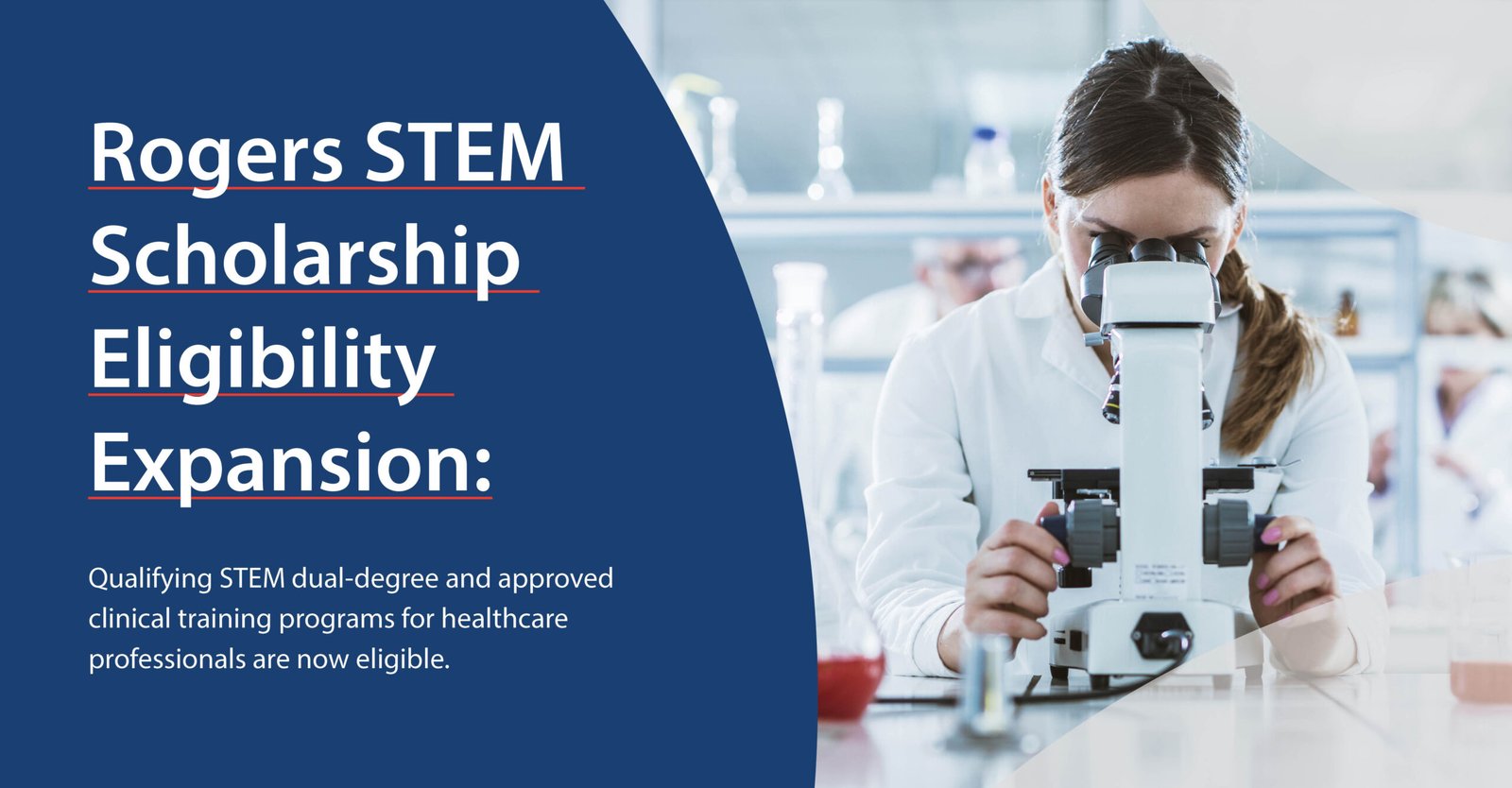
    Edith Nourse Rogers STEM Scholarship
    VA Education Service

    What Is the Edith Nourse Rogers STEM Scholarship?

    The scholarship was created by the Harry W. Colmery Veterans Educational Assistance Act of 2017, commonly known as the Forever GI Bill, and later expanded by the Johnny Isakson and David P. Roe Veterans Health Care and Benefits Improvement Act of 2020. It is named for Edith Nourse Rogers, a longtime U.S. Representative and the original author of the 1944 GI Bill.

    Unlike a separate scholarship program you apply to independently, the Rogers STEM Scholarship functions as an extension of benefits you already have. It is not a new pool of money you compete for from scratch — it adds to your existing Post-9/11 GI Bill or Fry Scholarship entitlement once you are close to using it up, and it is paid through the same VA channels your school already uses.

    How Much Does the Rogers STEM Scholarship Pay?

    Eligible recipients receive up to nine additional months of benefits or a maximum of $30,000 in total payments, whichever limit is reached first. The scholarship pays out in a fixed order:

    • First, tuition and mandatory fees are paid directly to your school.
    • If funds remain after tuition, you receive a payment for books and supplies.
    • If funds still remain after that, you receive a monthly housing allowance (MHA), calculated using the same Basic Allowance for Housing rates used for the Post-9/11 GI Bill.

    Your benefit amount is based on the same eligibility percentage tier you already hold under the Post-9/11 GI Bill — for example, someone eligible for 100% of the standard benefit receives 100% of the Rogers STEM Scholarship rate as well. As with the standard GI Bill, students at public schools can typically access in-state tuition rates even without state residency, and Chapter 33 private/foreign school payment rules apply to the STEM Scholarship as well.

    Importantly, using the Rogers STEM Scholarship does not draw down your regular Post-9/11 GI Bill or Fry Scholarship months — it is genuinely additional entitlement, though total combined VA education benefits generally cannot exceed 48 months across all programs.

    Who Is Eligible? The Three Qualifying Paths

    Eligibility for the Rogers STEM Scholarship depends on which of three specific situations describes you. In every case, you must also have six months or less of your Post-9/11 GI Bill or Fry Scholarship benefits remaining, or have already exhausted them, to apply.

    Path 1: Currently Enrolled in an Undergraduate STEM Degree

    You may qualify if all of the following are true: you are enrolled in an approved undergraduate degree program in a designated STEM field (such as engineering, biological or physical sciences, computer science, mathematics, technology, or certain healthcare fields); your program requires at least 120 semester credit hours or 180 quarter credit hours to graduate; you have completed at least 60 credit hours toward that degree; and you have six months or less of GI Bill or Fry Scholarship entitlement remaining.

    Path 2: Pursuing a STEM Teaching Certification

    You may qualify if you have already earned a qualifying undergraduate degree in a STEM field and are now enrolled in, or have been accepted into, a teaching certification program, provided you have six months or less of your GI Bill or Fry Scholarship entitlement remaining. This path is designed to help STEM graduates move into classroom teaching without running out of funding partway through certification.

    Path 3: Enrolled in a Covered Clinical Training Program

    Added by the Isakson-Roe Act, this path covers individuals who have earned a qualifying STEM degree and have been accepted into, or are enrolled in, a covered clinical training program required for licensure as a health care professional in their state — again provided six months or less of entitlement remain. This path recognizes that many healthcare STEM graduates need supervised clinical hours after their degree before they can practice.

    Who Can Apply: Veterans, Service Members, and Fry Scholars

    The Rogers STEM Scholarship is available to eligible Post-9/11 GI Bill recipients and to Fry Scholars, who are Gold Star spouses and children already receiving their own independent GI Bill-equivalent benefit. Because Fry Scholars hold their own entitlement, they can apply for the STEM Scholarship directly in their own right. However, spouses, children, and other dependents who only have access to benefits transferred to them generally cannot use this scholarship on their own, and it cannot be transferred to a third party the way standard GI Bill entitlement sometimes can.

    Priority Selection: Why Meeting the Minimum Isn’t a Guarantee

    Meeting the eligibility requirements above makes you eligible to apply, but it does not guarantee an award. Congress funds the Rogers STEM Scholarship at a set level each fiscal year, and if demand exceeds available funding, the VA prioritizes applicants based on two main factors:

    • Applicants who are eligible for 100% of the standard Post-9/11 GI Bill benefit rate.
    • Applicants who require the greatest number of additional credit hours to complete their program compared to other applicants.

    This means two otherwise-similar applicants can receive different outcomes depending on how much GI Bill entitlement percentage they hold and how far they still are from finishing their degree. It’s a strong reason to apply as early as your eligibility window opens rather than waiting until the last possible term.

    What the Rogers STEM Scholarship Cannot Be Used For

    This scholarship is built around undergraduate STEM study, with two narrow exceptions. Graduate degrees are not covered, with the exception of the teaching certification and clinical training pathways described above, since neither of those technically requires a student to be enrolled in a graduate degree program to qualify. Students pursuing a standard graduate STEM degree — a master’s in engineering, for instance — should look into other VA benefits, such as Veteran Readiness and Employment (VR&E), rather than the Rogers STEM Scholarship.

    How to Apply for the Rogers STEM Scholarship

    • Step 1: Check your remaining Post-9/11 GI Bill or Fry Scholarship entitlement on your Statement of Benefits through VA.gov, since you generally need six months or less remaining to qualify.
    • Step 2: Confirm your program meets the credit-hour and STEM-field requirements for your specific eligibility path (current undergraduate STEM student, STEM graduate pursuing teaching certification, or STEM graduate in a covered clinical training program).
    • Step 3: Gather documentation, including proof of enrollment, your declared major or program, and transcripts showing completed credit hours where applicable.
    • Step 4: Complete and submit VA Form 22-10203 (Edith Nourse Rogers STEM Scholarship application) through your existing education benefits account on VA.gov.
    • Step 5: Talk to your school’s certifying official or campus veterans representative before submitting, since VA regulations and individual school admission policies can affect how your program is evaluated.
    • Step 6: Monitor your VA.gov account for a decision, and if approved, your school will begin receiving payments the same way it already does for your GI Bill or Fry Scholarship benefits.

    Because funding is limited and priority is given to applicants with the most remaining credit hours and the highest GI Bill eligibility percentage, applying as soon as you hit the six-months-or-less threshold — rather than waiting until your benefits are fully exhausted — gives you the strongest position.

    Frequently Asked Questions

    Does the Rogers STEM Scholarship reduce my regular GI Bill months?

    No. It is additional entitlement on top of your standard 36 months of Post-9/11 GI Bill or Fry Scholarship benefits, not a replacement or reduction of them.

    Can I use the Rogers STEM Scholarship for a graduate degree?

    Generally no. The scholarship is built for undergraduate STEM degrees, with narrow exceptions for STEM graduates completing a teaching certification or a covered clinical training program for healthcare licensure.

    How is the housing allowance calculated under this scholarship?

    The monthly housing allowance uses the same Basic Allowance for Housing rates applied to the Post-9/11 GI Bill, based on your school’s zip code, and is only paid out after tuition, fees, and any books-and-supplies stipend have been covered.

    What happens if I don’t get selected due to limited funding?

    If Congress has not funded enough slots for all eligible applicants in a given fiscal year, the VA prioritizes those eligible for 100% of standard GI Bill benefits and those needing the most additional credit hours. Applicants who are not selected may be able to reapply in a future term as funding allows.

    Can dependents who received transferred GI Bill benefits apply for this scholarship?

    Generally, only the veteran, service member, or Fry Scholar holding their own entitlement can apply. Dependents using benefits transferred to them from a veteran typically cannot apply for the Rogers STEM Scholarship independently.

    Is there a deadline to apply?

    There isn’t a single universal deadline, but you must have six months or less of GI Bill or Fry Scholarship entitlement remaining to be eligible, so the practical window is late in your degree program. Applying as soon as you cross that threshold is the safest approach given limited annual funding.

    Final Thoughts

    The Edith Nourse Rogers STEM Scholarship solves a very specific, very common problem: STEM degrees that run longer than 36 months of standard GI Bill coverage allow. For veterans, service members, and Fry Scholars in engineering, computer science, healthcare, or STEM teaching programs, this benefit can mean the difference between finishing a degree debt-free and having to pay out of pocket for a final semester or two. If you’re within six months of exhausting your GI Bill or Fry Scholarship entitlement and you’re in a qualifying STEM path, don’t wait — check your Statement of Benefits, confirm your credit-hour standing with your school, and submit VA Form 22-10203 as early as you’re able.

  • GCU Scholarships: Complete 2026 Guide to Every Award and How to Qualify

    GCU Scholarships: Complete 2026 Guide to Every Award and How to Qualify

    Grand Canyon University (GCU) is one of the largest private Christian universities in the United States, and its scholarship program is a big part of why. In 2024 alone, GCU awarded more than $358 million in institutional scholarships across its campus, online, and evening programs. Yet with dozens of named awards — Chancellor, President, Provost, Dean, Barnabas, CCSC, and more — it is easy for prospective students to lose track of which ones they actually qualify for.

    This guide walks through every major category of GCU scholarship available for the 2026–2027 academic year: freshman merit awards, transfer scholarships, online and evening tuition discounts, need-based and departmental scholarships, and options for military-connected and international students. It also covers how the awards stack, how to apply, and what keeps a scholarship renewed year after year.

    GCU Scholarships

    How GCU Scholarships Work

    Most GCU scholarships fall into one of two broad categories: on-campus scholarships for traditional undergraduate students who live on or near GCU’s Phoenix, Arizona campus, and online/evening scholarships, which are structured as a percentage discount off tuition per course rather than a flat dollar amount. On-campus awards are typically renewable annually for up to eight semesters as long as the student maintains a minimum GPA and stays enrolled full-time. Many scholarships can be combined up to a set limit, but most cannot exceed the cost of tuition, and specific awards — like the online percentage-off scholarships — usually cannot be stacked with other GCU institutional aid.

    Freshman Scholarships (Traditional On-Campus Students)

    GCU’s flagship merit scholarships for incoming freshmen are tiered by unweighted high school GPA and standardized test scores. These are among the most valuable awards GCU offers because they apply directly to tuition and are renewable for the full length of a bachelor’s degree.

    Chancellor’s Scholarship

    The top tier, generally awarded to students with a 4.0 unweighted GPA, offers the largest annual award among the standard freshman tiers. Recipients must maintain a high cumulative GPA and continuous full-time enrollment to keep the award each year.

    President’s Scholarship

    Awarded to strong academic performers, typically requiring roughly a 3.8+ unweighted GPA or a competitive SAT/ACT score. Renewal requires maintaining a solid cumulative GPA throughout the degree.

    Provost’s Scholarship

    A mid-tier merit award for students with strong but slightly lower GPAs or test scores than the President’s Scholarship threshold, also renewable annually with GPA maintenance requirements.

    Dean’s Scholarship

    An entry-tier merit scholarship for admitted freshmen who meet GCU’s baseline academic thresholds, still renewable as long as the student stays in good academic standing.

    Because these awards are based on academic record, high school students should ask their GCU admissions counselor for the exact current GPA and test-score cutoffs, as thresholds can shift slightly from year to year. Students admitted primarily on ACT or SAT scores typically still need a minimum unweighted high school GPA to qualify.

    Transfer and Gap-Year Student Scholarships

    Students transferring from another college or university, or those taking a gap year before enrolling, are eligible for a separate scholarship track based on their transfer or cumulative GPA rather than high school performance. Award tiers mirror the freshman structure — higher cumulative GPAs unlock larger annual awards — and are renewable as long as the student maintains the required minimum GPA and stays enrolled full-time on campus.

    GCU also offers a Registration Commitment option for students who are taking a gap year, are currently enrolled elsewhere, or plan to attend another school before transferring to GCU. This lets a student lock in a scholarship offer and admission decision for a future semester, along with course advisement to maximize how many credits transfer.

    Online and Evening Program Scholarships

    Because online and evening students are not on a traditional four-year residential timeline, GCU structures their scholarships as a percentage discount off tuition per course rather than a flat annual dollar figure. These awards generally apply only to tuition, not fees, and typically cannot be combined with other GCU scholarships.

    • Evening-Campus New Student Scholarship: 20% off tuition for new students enrolling in an evening program on GCU’s main campus.
    • Undergraduate Psychology or Behavioral Health Science Scholarship: up to 32% off tuition for new online or evening undergraduate students in these programs.
    • New Undergraduate Nursing Student Scholarship: 5% off tuition for students starting an online RN-to-BSN or Bridge to MSN pathway.
    • Initial Teacher Licensure Scholarship (undergraduate): 32% off tuition for students pursuing initial teacher licensure through an online bachelor’s program.
    • Initial Teacher Licensure Scholarship (graduate): 25% off tuition for the master’s-level equivalent.
    • Education Master’s Degree Scholarship: a minimum of $3,375 off, up to $6,750 off, tuition for new master’s students in education or secondary education.
    • Cooperating Teacher Scholarship: 15% off tuition for master’s or doctoral applicants who are active cooperating teachers mentoring GCU student teachers.
    • Alumni Doctoral Degree Scholarship: a $5,000 scholarship for GCU alumni enrolling in a doctoral program for the first time, applied per course over the first two academic years.

    Each of these online awards comes with its own eligibility window and program restrictions, so it’s worth requesting current information directly through GCU to confirm you qualify before enrolling.

    Additional and Departmental Scholarships

    Beyond the core merit tiers, GCU offers a range of specialized scholarships for on-campus undergraduates tied to specific programs, communities, or circumstances.

    Barnabas Program Scholarships

    Designed for students pursuing a degree or minor through the College of Theology, the Barnabas Scholarship rewards academic excellence and demonstrated commitment throughout a student’s studies. It is applied progressively to cover GCU tuition and has no cash value for food or housing costs.

    Canyon Christian Schools Consortium (CCSC) Award

    This scholarship supports students graduating from CCSC-affiliated Christian schools, renewable annually for up to eight semesters. Students serving as a resident assistant, life leader, or in another program that already reduces housing costs will see their CCSC award reduced by $1,000, which also satisfies the program’s 40-hour service requirement.

    Business Scholarship for Entrepreneurial Students

    A highly competitive full-tuition scholarship of $16,500 per academic year is available to two incoming on-campus business students annually. It requires a 3.75 unweighted cumulative GPA and a demonstrated record of community service, entrepreneurship, and academic excellence, and is renewable with a 3.0 GPA or higher.

    Honors College Scholarship

    Students admitted to GCU’s Honors College may receive an Academic Excellence and Servant Leadership scholarship ranging from $1,000 to $5,000 per academic year. This award is stackable on top of other GCU-funded institutional aid, making it one of the more flexible options available.

    DACA and Dream.US Scholarship

    Registered DACA or DACA-eligible students who are fully admissible to GCU may qualify for a renewable scholarship, applied through TheDream.US, that covers all or nearly all remaining tuition and fees not covered by other aid — effectively a full-tuition scholarship for eligible on-campus undergraduates.

    Grand Canyon University Award

    A smaller but still useful award, offering $1,000 per academic year to Arizona residents and $250 per year to out-of-state new students, generally tied to graduating from a Maricopa County Community College with an associate degree or equivalent.

    Military and Veteran Scholarships

    GCU has a long-standing relationship with military-connected students and maintains a dedicated military scholarship track separate from its standard institutional aid, alongside support for GI Bill, Yellow Ribbon Program participation, and ROTC students. Active-duty service members, veterans, and military spouses or dependents should speak with GCU’s military admissions counselors directly, since eligibility and award amounts depend heavily on branch of service, GI Bill entitlement, and enrollment format (online, evening, or on-campus).

    International Student Scholarships

    International applicants are not eligible for U.S. federal aid, so institutional scholarships carry extra weight in their financial planning. GCU reviews international applicants on academic record, English-language proficiency, program of study, and proof of financial support, and offers dedicated scholarship consideration for admitted international undergraduates. Prospective international students should also research external and country-specific scholarship databases to combine with any GCU institutional award, since most GCU scholarships are open to being paired with outside funding unless otherwise noted.

    State and Federal Grants

    In addition to institutional scholarships, GCU students may qualify for state and federal grants, which — unlike loans — do not need to be repaid. These can include need-based federal grants determined through the FAFSA, as well as Arizona-specific grant programs. Completing the FAFSA early each year is the single most important step for maximizing grant eligibility, since many state and federal grant programs award funds on a first-come, first-served basis until funding runs out.

    How to Apply for GCU Scholarships

    • Step 1: Apply for admission to GCU and indicate your intended enrollment format (on-campus, online, or evening), since scholarship tracks differ significantly between them.
    • Step 2: Submit your official high school transcript or college transcript so GCU can evaluate your GPA against the relevant scholarship tier.
    • Step 3: Submit SAT or ACT scores if you want them considered for a higher merit tier (optional for some tiers, but it can unlock a larger award).
    • Step 4: Complete the FAFSA as early as possible to be considered for need-based grants alongside merit scholarships.
    • Step 5: Speak with your assigned GCU university counselor about program-specific scholarships — Barnabas, Honors College, business, military, or international — since many of these require a separate conversation or application rather than automatic consideration.
    • Step 6: Review your official award letter carefully to see which scholarships were combined, what the renewal GPA requirement is, and whether the award is locked in through a Registration Commitment.
    • Step 7: Maintain the required minimum GPA and continuous full-time enrollment each semester to keep your scholarship renewed for all eight semesters.

    Frequently Asked Questions

    Can I combine multiple GCU scholarships?

    In many cases, yes — scholarships are allowed to be combined up to certain limits, and awards generally cannot exceed the cost of attendance. However, several online/evening percentage-off scholarships explicitly cannot be combined with other GCU institutional aid, so always check the specific disclaimer for each award.

    What happens if my GPA drops below the renewal requirement?

    Most GCU merit scholarships require maintaining a specific minimum cumulative GPA. If your GPA falls below that threshold — commonly around 3.0 for many tiers — your scholarship amount can be reduced or lost entirely, though some tiers step down rather than disappearing outright.

    Do online students get the same scholarships as on-campus students?

    No. Online and evening students are offered percentage-off-tuition scholarships tied to specific programs (such as psychology, nursing, or education), while on-campus traditional undergraduates receive the tiered Chancellor/President/Provost/Dean merit awards along with additional program-specific scholarships.

    Are GCU scholarships available for graduate and doctoral students?

    Yes. GCU offers targeted graduate-level scholarships, including teacher licensure discounts, cooperating teacher awards, and an alumni doctoral scholarship, though the dollar amounts and structures differ from undergraduate merit awards.

    Is the FAFSA required to get a GCU scholarship?

    Merit scholarships based on GPA and test scores generally do not require the FAFSA, but need-based grants do. Since many students qualify for both merit aid and grants, completing the FAFSA is still strongly recommended to maximize total funding.

    Final Thoughts

    GCU’s scholarship system is layered by design: a strong academic record unlocks the base merit tier, program-specific awards like Barnabas or the Honors College scholarship can stack on top, and grants fill in additional need-based support. The key to maximizing your award is treating it as a checklist rather than a single application — submit transcripts and test scores early, complete the FAFSA regardless of merit eligibility, and have a direct conversation with a GCU counselor about any specialized scholarship your background might unlock, whether that’s military service, DACA status, international residency, or entrepreneurial ambition. With over $358 million awarded in a single year, GCU has built one of the more accessible scholarship systems among private universities — the funding is there for students willing to ask the right questions.

  • Fry Scholarship: Complete 2026 Guide to Eligibility, Benefits & How to Apply

    Fry Scholarship: Complete 2026 Guide to Eligibility, Benefits & How to Apply

    Losing a parent or spouse in the line of duty is a loss no family should have to carry. The Marine Gunnery Sergeant John David Fry Scholarship exists to make sure that sacrifice is honored with something concrete: a fully funded path to a college degree for the children and surviving spouses left behind. Yet according to veteran advocacy groups, thousands of eligible Gold Star families never claim the benefit in full simply because they do not know how it works.

    This guide breaks down exactly who qualifies for the Fry Scholarship in 2026, what it pays for, how it compares to the older Dependents’ Educational Assistance (DEA) program, and the step-by-step process for applying — including a major 2025 law change that restored benefits to surviving spouses who remarried.

    What Is the Fry Scholarship?

    The Fry Scholarship is a Post-9/11 GI Bill benefit named after Marine Gunnery Sergeant John David Fry, who was killed in Iraq in 2006. Congress created the program in 2009 and expanded it in 2014 to include surviving spouses, not just children. It is administered by the U.S. Department of Veterans Affairs (VA) and provides education benefits at the full 100% tier of the Post-9/11 GI Bill — the highest benefit level available.

    In simple terms, the Fry Scholarship pays for school the same way the Post-9/11 GI Bill would pay for an eligible veteran, but the recipient never had to serve themselves. Instead, eligibility flows from the death of a parent or spouse who died in the line of duty while on active duty on or after September 11, 2001.

    Fry Scholarship Eligibility Requirements

    Eligibility hinges on two things: your relationship to the fallen service member, and the circumstances of that service member’s death. Below is a breakdown for each category of beneficiary.

    Eligible Children

    A child of a service member or Selected Reserve member is eligible for the Fry Scholarship if the parent died in the line of duty while on active duty on or after September 11, 2001. There is no minimum or maximum age requirement tied to the child’s date of birth, and marital status does not affect a child’s eligibility. Children may use the benefit any time after they turn 18, or after earning a high school diploma or equivalency, and the benefit does not expire based on age.

    Eligible Surviving Spouses

    A surviving spouse is eligible if their husband or wife died in the line of duty while on active duty on or after September 11, 2001. For years, spouses lost eligibility either 15 years after the service member’s death or upon remarriage — whichever came first. That rule has changed significantly, which is covered in detail later in this guide.

    Who Is Not Eligible

    • Surviving spouses and children of Air National Guard service members who died while on State Active Duty (as opposed to federal active duty) are not eligible.
    • Deaths that occurred before September 11, 2001 do not qualify.
    • If the service member died from a service-connected disability rather than in the line of duty while on active duty, the family should instead look into the DEA (Chapter 35) program, covered below.

    Fry Scholarship Benefits: What You Get

    The Fry Scholarship pays benefits at the 100% tier of the Post-9/11 GI Bill for up to 36 months, roughly the length of a four-year degree when combined with summer terms. Here is what that covers.

    Tuition Coverage

    At public colleges and universities, the VA pays the full in-state tuition and mandatory fees directly to the school — even if the student is not technically a resident of that state. At private or foreign schools, tuition is capped at a rate the VA updates every academic year. For the 2025–2026 academic year, that private-school cap is $29,920.95. Schools participating in the Yellow Ribbon Program can also close the gap between the VA cap and actual tuition costs at more expensive private institutions.

    Monthly Housing Allowance (MHA)

    Students attending school more than half-time receive a monthly housing stipend based on the zip code of the campus, calculated using the same Basic Allowance for Housing (BAH) rates used for military personnel. This can range from roughly $1,800 to well over $3,000 per month depending on the cost of living near the school. Students taking classes entirely online receive a reduced flat housing rate instead.

    Books and Supplies Stipend

    Recipients also receive a stipend for books and supplies, currently up to $1,000 per academic year, paid out proportionally based on enrollment.

    Yellow Ribbon Program

    Fry Scholarship recipients qualify for the Yellow Ribbon Program, a voluntary agreement between the VA and participating schools to cover tuition costs above the standard private-school cap. Under Yellow Ribbon, a school agrees to contribute a certain amount toward the gap, and the VA matches that contribution dollar for dollar — which can make even expensive private universities fully affordable.

    Fry Scholarship vs. DEA (Chapter 35): Which Should You Choose?

    Families of fallen or permanently disabled veterans sometimes qualify for both the Fry Scholarship and DEA (Dependents’ Educational Assistance, also called Chapter 35). The two programs are structured very differently, and in most cases where a family qualifies for both, Fry is the far more valuable option.

    DEA pays a fixed monthly stipend directly to the student — currently around $1,488 per month at full-time enrollment — regardless of tuition costs. Over three years, that adds up to roughly $54,000. The Fry Scholarship, by contrast, pays actual tuition directly to the school, plus a separate housing allowance and books stipend. Over the same three years, total Fry value commonly exceeds $100,000, and can be significantly higher at pricier private schools.

    If a child became eligible because a parent died on or after August 1, 2011, the choice between Fry and DEA is a one-time, irrevocable election — meaning it is worth taking the time to run the numbers for your specific school before deciding. Children of a parent who died before August 1, 2011 may in some cases use the full entitlement of both programs, though not simultaneously.

    Recent Changes: The Remarriage Rule and Benefit Restoration

    One of the most important updates to the Fry Scholarship in recent years involves surviving spouses who remarried. Under the Elizabeth Dole 21st Century Veterans Healthcare and Benefits Improvement Act of 2025, the old rule that cut off a spouse’s eligibility either upon remarriage or 15 years after the service member’s death has been removed entirely. Surviving spouses can now access Fry Scholarship benefits at any time, regardless of marital status.

    If your Fry Scholarship benefits previously expired under the old rules, the VA will restore them for use any time after January 2, 2025 — even if you have since remarried. To get restored benefits, you will need to reapply using VA Form 22-5490. Notably, surviving spouses can continue receiving Dependency and Indemnity Compensation (DIC) payments while also using the Fry Scholarship; the two benefits do not offset each other.

    How Long Do You Have to Use the Fry Scholarship?

    Children of fallen service members can use their 36 months of Fry Scholarship benefits at any point after turning 18 or completing high school, with no expiration age. Surviving spouses, following the 2025 law change, no longer face a 15-year time limit either. If a spouse also served in the military themselves, they may be eligible for up to 36 months under Fry and another 36 months of their own Post-9/11 GI Bill entitlement, and can potentially receive additional months if another parent transfers entitlement to them.

    How to Apply for the Fry Scholarship: Step by Step

    • Step 1: Confirm eligibility. Gather documentation showing your relationship to the service member and confirmation that the death occurred in the line of duty on active duty on or after September 11, 2001 (such as a DD Form 1300 or casualty report).
    • Step 2: Complete VA Form 22-5490 (Dependents’ Application for VA Education Benefits). This can be submitted online through VA.gov, by mail, or in person at a VA regional office.
    • Step 3: Submit supporting documents, including your Social Security number, the service member’s information, and proof of the relationship (birth certificate for children, marriage certificate for spouses).
    • Step 4: Wait for your Certificate of Eligibility (COE). The VA reviews the application and, once approved, issues a COE that states how many months of benefits you have and at what percentage level.
    • Step 5: Choose your school and submit the COE. Give the Certificate of Eligibility to the school’s VA Certifying Official, who will certify your enrollment each term so tuition and housing payments can begin.
    • Step 6: If eligible for both Fry and DEA, request comparison information from the VA before making your irrevocable election between the two programs.

    Frequently Asked Questions

    Can I use the Fry Scholarship at any college?

    You can use it at any VA-approved public, private, or foreign institution, as well as many vocational and technical training programs. Tuition coverage rules differ between public and private schools, as outlined above.

    Does the Fry Scholarship cover graduate school?

    Yes. As long as you have remaining months of entitlement, the benefit can be used for graduate programs, not just undergraduate degrees.

    What happens to unused Fry Scholarship months?

    For children, unused months generally do not expire based on age. For surviving spouses, the 2025 law change removed the 15-year time limit, and previously expired benefits can now be restored through a new application.

    Can both a spouse and a child use the Fry Scholarship from the same service member’s death?

    Yes. Each eligible child and the surviving spouse can separately receive up to 36 months of benefits; the entitlement is not a single shared pool.

    Is the Fry Scholarship taxable income?

    No. VA education benefits, including the Fry Scholarship, are not considered taxable income.

    Can I switch from DEA to Fry Scholarship later?

    If your parent died on or after August 1, 2011, the election between Fry and DEA is generally irrevocable once made, so it is worth comparing the value of both programs carefully before choosing.

    Final Thoughts

    The Fry Scholarship is one of the most generous education benefits the federal government offers, and it exists specifically because a service member gave their life in the line of duty. For Gold Star children and surviving spouses, claiming it in full — tuition, housing, books, and Yellow Ribbon coverage where applicable — can be worth well over $100,000 toward a degree. If you think you or a family member may qualify, especially under the newly restored spousal eligibility rules, the next step is simple: gather your documentation and file VA Form 22-5490. It is a benefit your service member earned, and it belongs to the family they left behind.

  • MBA Scholarships: The Complete Guide to Funding Your Business Degree

    MBA Scholarships: The Complete Guide to Funding Your Business Degree

    A Master of Business Administration is one of the most respected — and most expensive — postgraduate degrees in the world. Tuition at a top-ranked business school can easily run into six figures once you add living costs, travel, and study materials. That price tag is exactly why MBA scholarships exist, and why thousands of ambitious professionals research them every year before they ever fill out an application form.

    Whether you are a mid-career manager in Lagos aiming for a top European business school, a fresh graduate eyeing a US MBA, or a founder who wants an internationally recognized credential without draining your savings, this guide walks you through the major categories of MBA scholarships, the most competitive programs currently open, and the exact steps that turn an applicant into a scholar.

    Why MBA Scholarships Matter

    Business schools compete for the same pool of strong candidates, and scholarships are one of their main tools for attracting them. A generous scholarship does more than cover tuition — it signals that a school genuinely wants you, and it often comes bundled with mentorship, networking access, and sometimes guaranteed internships.

    For applicants from Nigeria and other African countries, scholarships can also solve a second problem beyond cost: many schools award scholarships specifically to diversify their cohort, which means strong African applicants are often competing in a smaller, more targeted pool than they realize.

    Types of MBA Scholarships

    1. Merit-Based Scholarships

    Awarded purely on academic record, professional achievement, GMAT or GRE score, and leadership potential. These are the most common type and are usually offered directly by the business school as part of the admissions decision — no separate application is required beyond your regular MBA application.

    2. Need-Based Scholarships

    Awarded according to demonstrated financial need. Applicants typically submit income statements, bank records, or a financial aid form alongside their application. These are more common at US schools than at European ones.

    3. Diversity and Inclusion Scholarships

    Designed to bring underrepresented groups into the MBA cohort — this includes scholarships aimed at women in business, African and Caribbean applicants, first-generation graduates, and candidates from countries with limited access to global business education.

    4. Government and Bilateral Scholarships

    Funded by a government, often as part of a foreign policy or development goal. These usually require you to return to your home country after graduation and can cover tuition, a living stipend, flights, and health insurance.

    5. Corporate and Foundation Scholarships

    Sponsored by companies or private foundations, sometimes tied to a specific industry (finance, energy, consulting) or in exchange for a post-MBA work commitment with the sponsoring organization.

    Top MBA Scholarships to Know in 2026

    Chevening Scholarships (UK Government)

    Chevening funds one-year master’s degrees in the UK, including MBAs at eligible institutions, for future leaders from over 160 countries. It covers tuition, a monthly stipend, flights, and additional allowances. Nigerian applicants form one of the largest Chevening cohorts each year, and the program is highly regarded for its leadership focus rather than pure academic scoring.

    Fulbright Foreign Student Program (USA)

    Fulbright funds graduate study in the United States, including MBA programs at partner universities, for students from more than 160 countries. Awards typically cover tuition, airfare, a living stipend, and health insurance, and the program places strong emphasis on cultural exchange and community impact beyond the classroom.

    Forte Foundation Fellowships

    Offered through a consortium of top business schools to increase the number of women in business leadership. Forte Fellows receive scholarship funding directly from the participating school, along with access to a global network of women MBA graduates and dedicated career coaching.

    Mastercard Foundation Scholars Program

    Focused on academically talented young people from Africa who lack the financial means to pursue higher education, including business degrees at select partner universities. The program covers full tuition, accommodation, and provides leadership development and mentorship support.

    Rotary Peace and Global Grant Scholarships

    While not exclusively an MBA scholarship, Rotary Global Grants can fund graduate business degrees connected to Rotary’s areas of focus, such as economic and community development, at approved institutions worldwide.

    School-Specific Scholarships

    Nearly every top-ranked business school runs its own scholarship pool. Examples include the Harvard Business School Fellowships, the Stanford GSB Fellowship, INSEAD’s regional and merit scholarships, the London Business School’s Access and Diversity Scholarships, and Wharton’s Fellowship Program. These are typically awarded automatically when you submit your MBA application — there is no separate form, but strong essays and a compelling personal story significantly improve your odds.

    DAAD Scholarships (Germany)

    The German Academic Exchange Service funds postgraduate study in Germany, including MBA and management-focused master’s programs, for students from developing and emerging economies. Germany’s relatively low tuition costs mean a DAAD award can stretch further than scholarships at more expensive destinations.

    Who Is Eligible for MBA Scholarships

    Eligibility criteria vary by scholarship, but most programs look for a combination of the following:

    • Academic record: A completed undergraduate degree, typically with a strong GPA or its equivalent
    • Professional experience: Usually 2 to 8 years, since most MBA programs (unlike specialized master’s degrees) expect real workplace experience
    • Standardized test scores: A competitive GMAT, GRE, or Executive Assessment score, though a growing number of schools waive this for experienced applicants
    • Language proficiency: Proof of English proficiency (IELTS or TOEFL) if your prior education was not in English
    • Demonstrated leadership: Concrete examples of initiative, team leadership, or community impact — this is often the deciding factor between two similarly qualified applicants
    • Nationality restrictions: Citizenship of an eligible country for government and foundation-funded awards, since many are restricted to specific regions or nationalities

    How to Apply for an MBA Scholarship: Step-by-Step

    Step 1: Start Early

    Most MBA scholarship deadlines fall six to twelve months before the program start date, and some, like Chevening, open applications a full year in advance. Build a calendar of deadlines as soon as you decide to pursue an MBA.

    Step 2: Choose the Right Programs

    Not every business school fits every scholarship. Cross-reference your target schools against the scholarships you qualify for, and prioritize applying to schools with strong internal scholarship pools if external funding options in your country are limited.

    Step 3: Prepare Your Test Scores Early

    A strong GMAT or GRE score does more than get you admitted — many merit scholarships use test scores as a key differentiator. Give yourself at least three months of preparation time before your target test date.

    Step 4: Build a Compelling Application

    Scholarship committees read thousands of similar profiles every cycle. What separates a funded applicant from a rejected one is usually not credentials but story — a clear, specific account of what you have done, what you plan to do with the MBA, and how that connects to the scholarship’s mission.

    Step 5: Secure Strong Recommendation Letters

    Choose recommenders who know your work closely rather than the most senior person available. A detailed letter from a direct manager carries more weight than a generic one from a CEO who barely knows you.

    Step 6: Write Scholarship-Specific Essays

    Never reuse a single essay across multiple scholarships without tailoring it. Reviewers can tell when an essay was written for a different program, and it signals a lack of genuine interest in their specific scholarship.

    Step 7: Prepare for Interviews

    Shortlisted candidates for scholarships like Chevening and Fulbright typically go through a structured interview. Practice answering questions about your leadership experience, career goals, and why you specifically need this scholarship rather than self-funding.

    Common Mistakes That Cost Applicants Their Scholarship

    • Ignoring eligibility details: Applying to scholarships without checking nationality, age, or degree-field restrictions first
    • Leaving it too late: Waiting until a month before the deadline to request recommendation letters or transcripts
    • Generic essays: Vague personal statements that could apply to any candidate, with no specific examples or numbers
    • Overlooking mid-tier schools: Applying only to Harvard- or Stanford-tier programs while ignoring strong scholarships at slightly less famous but excellent schools
    • Underestimating visa logistics: Not accounting for visa timelines, health insurance requirements, or proof-of-funds letters that some embassies still require even with a scholarship

    Final Thoughts

    An MBA scholarship is not a lucky break reserved for a handful of exceptional applicants — it is a competitive but very achievable outcome for candidates who prepare early, target the right programs, and tell a clear, specific story about their leadership and goals. Start building your scholarship list at least a year before your intended intake, keep your test scores and documents ready, and treat every essay as a chance to show a selection committee exactly why investing in you is worth it.

    Frequently Asked Questions

    Can I get a fully funded MBA scholarship as an international student?

    Yes. Programs like Chevening, Fulbright, the Mastercard Foundation Scholars Program, and many school-specific fellowships cover full tuition plus living costs for qualified international applicants.

    Do I need a GMAT score to qualify for an MBA scholarship?

    Not always. Some scholarships and schools waive the GMAT for candidates with strong professional experience, but a competitive score still strengthens most applications, especially for merit-based awards.

    Are MBA scholarships available for Nigerian and African applicants?

    Yes, several major scholarships, including Chevening, the Mastercard Foundation program, and DAAD, actively prioritize applicants from Nigeria and other African countries as part of their selection goals.

    How many years of work experience do I need for an MBA scholarship?

    Most MBA programs and their scholarships expect two to eight years of professional experience, though the exact requirement varies by school and program type.

    Can I apply for more than one MBA scholarship at the same time?

    Yes, and it is generally recommended, as long as you tailor each application to the specific scholarship rather than submitting identical essays across programs.